

Marketing
Zero-Click Marketing: How to Execute and Measure It
Zero-click marketing delivers full value where your audience already is. Here is how to execute it channel by channel and measure results without relying on clicks.
 Business Developer, My SEO Experts
Karan Grover is a business developer, and a co-founder of My SEO Experts. He works with business owners and marketing teams to understand their growth goals, audit where their search visibility stands today and shape SEO and digital marketing plans that fit their market and budget. He writes about choosing the right agency, measuring marketing ROI and turning search traffic into leads and sales.
Zero-click marketing delivers full value where your audience already is. Here is how to execute it channel by channel and measure results without relying on clicks.
A tactical B2B answer engine optimization playbook: prompt maps by buying role, the vendor pages and review profiles AI tools cite, and a 90-day plan with metrics.

Link building quotes range from a few dollars to thousands per link. This guide pulls together published market data, explains the pricing models and what drives legitimate costs, and shows how to budget without buying risk.
How to run Google Ads when leads are scarce and deals take months: intent-based keywords, hard qualification, CRM imports and a lead-stage value ladder.

The FCB grid shows whether buyers think or feel their way to a purchase, and how much is at stake. Here is how to place your product and plan messages and channels around it.

Demographics say who buys; psychographics explain why. Here is how to research values and lifestyles, build segments and use them responsibly.
Older adults are online, varied and often buying for others. This guide covers research, respectful messaging, accessible design, channels and trust.

Gen Z discovers brands in feeds and checks them through other people. This guide covers platforms, content, values, creators and measurement.
The Ansoff matrix forces one honest question: grow with what you already sell, to whom you already sell it, or take a bigger risk? Here is how to use it with real numbers.

Experiential marketing is not just for brands with stadium budgets. Here is how to design, run and measure brand experiences at small-business scale.

Cold email still books meetings in B2B, but the legal and deliverability rules are tighter than ever. Here is how to run outreach that is compliant, targeted and actually read.

Vague RFPs attract vague proposals. This guide shows how to write a marketing RFP that agencies can price accurately and that helps you pick the right partner.
Third-party data is less reliable every year. Here is how to build a first-party data strategy that collects the right data, with consent, and puts it to work in ads, email and personalisation.

A website is worth what a buyer will pay for its future profit, adjusted for risk. This guide shows how valuations are calculated and what moves the multiple up or down.

Pop-ups can grow your list and sales or quietly drive visitors away. Here is how to choose the type, timing and offer, stay within Google’s interstitial guidance and test properly.

Content sites need revenue that does not wreck the reading experience or search visibility. Here is how the main monetisation models compare and how to combine them.
NPS, CSAT and CES are simple to collect and easy to misuse. Here is what each measures, how to calculate and read them honestly, and how to turn feedback into action.

The first screen decides whether visitors scroll or leave. Here is what belongs above the fold on each page type, how to handle mobile and speed, and how to test changes properly.
Professional firms sell judgement, not products, so marketing has to reduce perceived risk. Here is how to position, publish, build referrals and measure results.

As companies add products, names multiply and buyers get confused. Here is how branded house, house of brands and endorsed models work, how to name new products and what each means for SEO.

Your CRM says you lost on price. Your buyers may say something very different. Here is how to run win/loss interviews and turn the answers into better positioning, sales and content.

As marketing teams grow, heroics stop scaling. Here is what marketing operations covers, how to run a stack audit, set data standards and build the function stage by stage.

Most lead-quality arguments come from missing agreements. Here is how to define MQLs and SQLs, write an SLA both teams sign, share pipeline metrics and build it all into your CRM.

Direct mail stands out because inboxes are crowded, but it only pays when it is targeted and measured. Here is how to plan, integrate and track a modern mail campaign.
A practical guide to QR code campaigns that scan first time, land on the right page and show up properly in GA4, plus the fake-code scams to defend against.

How a local business can plan, buy, design and measure billboards, street furniture and digital out-of-home without treating them like a click channel.

A playbook for cause partnerships that customers believe: fit scoring, partnership models, specific donation promises, the rules on green claims and impact reporting.

How small businesses can design low-cost stunts that people photograph and share, stay on the right side of property and advertising rules, and measure what happened.
A diagnostic approach to free trial conversion for SaaS and subscription businesses: find the leaking stage, speed up activation and handle pricing and billing honestly.

A framework for product-led growth: choosing the free model, designing loops users want to trigger, defining PQLs and measuring what replaces lead volume.

How to choose a lean, connected set of marketing tools on a small budget, prune duplicate subscriptions and review the stack once a year.

A factual overview, current as of October 2026, of the privacy laws that shape email, tracking and advertising, and a process for staying compliant across markets. Not legal advice.

AI assistants say your pricing is unavailable or quote old figures when your site is silent. Learn how ranges, examples and clear pricing pages fix that.

There is no standard AI search budget. Here is how to size, prioritise and phase investment alongside your existing SEO and content spend.

A practical template for explaining AI search to executives, with dated evidence, cost framing, risks and KPIs they can hold you to.

What a credible AI search agency delivers, the questions to ask in a pitch, and the red flags that should end the conversation.

What drives the cost of AI search and GEO services, how audits, projects and retainers compare, and how to scope work with realistic expectations.
Should you hire an in-house SEO, bring in an agency, or combine both? Here is a practical framework for choosing, with checklists and the mistakes to avoid.
A step-by-step way to vet link building services, with the questions to ask, the red flags to walk away from and a vendor scorecard.

B2B buyers increasingly ask ChatGPT and other AI tools to suggest and compare vendors before they speak to sales. Here is how that shortlist forms and how to earn a place on it.

AI assistants influence buying decisions long before anyone clicks. This framework shows how to connect AI visibility to leads and revenue without overclaiming.

A practical guide to building a lightweight, ethical competitive intelligence system that turns what rivals do into better marketing decisions.

A step-by-step method for choosing marketing channels, allocating budget and measuring the mix without relying on last-click data.
How to benchmark your marketing performance against competitors with fair metrics, reliable data and a repeatable scorecard.

A step-by-step process for researching a new city, country or segment before you expand, with free data sources and a market scorecard.

What TAM, SAM and SOM mean, three ways to calculate them, and how to use search data to sanity-check your market size estimate.

How to plan, coordinate and measure a multichannel marketing strategy that reaches customers on the channels they already use.

A lifecycle plan for mobile app marketing, from pre-launch and paid acquisition to onboarding, ratings and retention.

How to optimise your App Store and Google Play listings for search visibility and conversion, with official limits and testing options.

A practical guide to competitive matrices, with the main formats, a step-by-step process and copyable scorecard and perceptual map templates.

A plain-English guide to Porter's Five Forces, with a step-by-step analysis process and a scoring template marketers can use.

STP marketing helps you decide who to serve and how to win them. This guide walks through segmentation, targeting and positioning with practical examples.

Your pricing page is where interest turns into a decision. Learn how to structure plans, show costs honestly and test changes that lift conversions.

People trust other people more than they trust ads. Here are the types of social proof that work, where to use them and the rules you must follow.

Brand guidelines only help if people use them. Here is what to include, how to build them step by step and how to make them easy to follow.
Customers do not buy products; they hire them to make progress. Learn how to use Jobs to Be Done to sharpen messaging, content and offers.

A fractional CMO gives you senior marketing leadership part time. Learn when it makes sense, how engagements work and how to judge success.
Text messages reach people almost instantly, which is why SMS marketing works and why the rules are strict. Here is how to do it properly.

A good loyalty program rewards the behaviour that grows your business. Learn which program types work, how to design rewards and how to measure results.
A launch is a sequence, not a single day. Use this step-by-step product launch marketing plan to build demand, launch well and keep momentum.

How a price is presented changes how it feels. Learn the main pricing psychology tactics, the evidence behind them and how to use them honestly.

AI can turn hours of competitor research into minutes, but only if it works from live data and you verify what it tells you. Here is a practical, repeatable workflow for AI-assisted competitor analysis.

Lapsed customers already know you, which makes them some of the cheapest sales you can win. Here is how to define, segment, message and measure a win-back campaign that works.
Facebook ads have no price list, but sourced benchmarks and a simple budgeting method tell you what to expect and how to lower costs.
Wholesale buyers want to shop online like consumers but buy like businesses. Here is how to market a B2B store that wins accounts and keeps them reordering.

Most client reports are data dumps nobody opens. Here is a practical framework for marketing reports that lead with outcomes, explain why numbers moved and end with clear decisions.
B2B buyers research for weeks and decide in groups. This framework shows how to build an SEO strategy that reaches every stakeholder and feeds your sales pipeline.
A PPC budget should come from your numbers, not a guess. Here is a simple method to work back from target leads and cost per lead, with worked examples.

CPA tells you what each customer or lead costs in ad spend. Learn the formula, how to set a profitable target CPA and the levers that bring it down.
A practical, step-by-step plan for running Google Ads as a small business – what to launch first, how much to spend and how to avoid wasting your budget.

A practical newsletter strategy framework: goal, promise, format, frequency and measurement, so every issue earns its place in the inbox.

How to grow an email list of people who actually want your emails, with consent rules, proven tactics and a step-by-step setup.
How inbox placement works, what Gmail and Yahoo require, and a step-by-step process to diagnose and fix emails landing in spam.

A practical framework for writing honest, specific email subject lines, with examples by email type and a smarter way to test.
How email automation works, which automated flows to build first, and how to set them up so they stay relevant and compliant.
What marketing automation can do beyond email, which workflows to build first, how to choose a platform and how to roll it out step by step.
How marketing teams use a CRM to segment, automate and prove revenue, with a step-by-step setup and the privacy rules that apply.

A practical guide to lead scoring: how to combine fit and engagement data, set point values and thresholds, and hand sales the leads most likely to buy.
Most new leads are not ready to buy. Learn how to build lead nurturing tracks that keep you useful and visible until they are.
Inbound marketing earns attention instead of buying it. Here is how the model works in 2026, which channels drive it and how to build a plan that produces leads.

Inbound pulls buyers in; outbound reaches out to them. Here is how the two compare, when each makes sense and how to run outbound without breaking the rules.

Account-based marketing flips the funnel: pick the companies you want first, then market to their buying teams. Here is how to run ABM without an enterprise budget.

Product marketing connects what you build with the people who should buy it. Learn the role, the positioning and messaging work, and how to plan a launch.

A go-to-market strategy is your plan for getting a product in front of the right buyers and winning them. Use this practical template to build yours.

Your value proposition is the reason someone should buy from you. Here is a step-by-step process, templates and examples for writing one that lands.

If customers cannot tell you apart from competitors, they choose on price. Here is how to find, write and prove a unique selling proposition that actually differentiates.

Brand positioning decides how customers think of you compared with the alternatives. Learn the components, strategies and a step-by-step process to define yours.

Brand awareness decides whether people think of you when they are ready to buy. Here is how to build it deliberately and measure it without guesswork.

Your brand voice is the personality people hear in everything you publish. Learn how to define it, document it and keep it consistent across every channel and writer.

A marketing plan turns good intentions into a schedule, a budget and measurable goals. Follow this step-by-step guide and fill in the one-page template.
A SWOT analysis is only useful if it changes what you do. Learn how to run one with real data and turn the four quadrants into marketing decisions.
Marketing to everyone means persuading no one. Here is a practical, data-led process to define your target audience and put it to work across SEO, ads and content.

You do not need a research agency to understand your market. These low-cost market research methods help small teams make better marketing decisions.

Keeping customers is usually cheaper than finding new ones. Here are customer retention strategies that work, how to measure retention, and mistakes to avoid.
Referrals bring in customers who already trust you. Learn how to design a referral marketing programme that people actually use, and keep it compliant.
Word of mouth now travels through reviews, group chats, Reddit threads and AI answers. Here is how to earn it, encourage it and measure it.
How to use events to win customers: choosing a format, a promotion timeline from eight weeks out to follow-up, getting listed on Google, and measuring what each event delivers.

A practical guide to affiliate marketing from the brand's side: commission models, recruiting partners, tracking, FTC disclosure rules and Google's link guidelines.
How two businesses can grow faster together: the main types of partnership marketing, how to choose and pitch partners, what to put in writing and how to measure results.

Growth marketing applies an experiment-driven approach to the whole customer lifecycle. Here is the framework, the metrics and a repeatable testing process.

Startups cannot market like big brands. This playbook shows what to do at each stage, from finding your first customers by hand to scaling the channels that work.
Practical, low-cost local marketing ideas grouped by channel, with a 90-day plan to put them into action and the mistakes to avoid.

Every business has busy and quiet seasons. Learn how to find your real demand curve, plan a 12-month seasonal calendar and time SEO, ads and email around it.

What the 2025 holiday season data tells us, plus a practical week-by-week holiday marketing plan for Black Friday, Cyber Monday and December.

Webinars still generate some of the best-qualified leads in B2B marketing. Here is how to plan, promote and convert a webinar in 2026, from topic to follow-up.

How to position, publish and promote a podcast so it finds listeners, earns subscribers and supports your business goals.

A practical framework for finding, shaping and using brand stories across your website, ads and social channels, without slipping into hype.

Cost per click explained: how the auction sets it, 2026 benchmarks by industry, how to calculate the CPC you can afford and proven ways to lower it.

A customer journey map shows how real customers find, choose and stay with you. Learn how to build one from evidence and turn it into a list of fixes.

Customer lifetime value shows what a customer is really worth. Learn the main CLV formulas with examples, how to compare CLV with CAC, and how to grow it.

The lead generation strategies that still work in 2026, how to choose the right mix for your business, and a step-by-step plan to build a system that converts.

A lead magnet turns anonymous visitors into subscribers. Get 15 ideas, a step-by-step creation process and the compliance basics for collecting emails.
How much should you spend on marketing, and where? Use 2026 benchmarks, a goal-based method and a simple template to plan a budget that pays for itself.

A winning SEO proposal is specific, evidence-based and honest. Learn what to include, how to write it step by step, and copy our section-by-section template.

SEO pricing varies widely by provider, location and scope. We summarise what published industry surveys report and explain how to budget sensibly.
Hiring the wrong SEO agency wastes months and can damage your site. Use these 15 questions and a simple selection process to choose with confidence.

SEO ROI shows whether organic search is paying off. Learn how to calculate it, track the right data in GA4 and Search Console, and improve your return.
A practical, step-by-step process for building a digital marketing strategy that connects channels to business goals, with a channel comparison and one-page template.

Learn the stages of the marketing funnel, what content and channels fit each one, how to diagnose leaks, and how the model fits today's messy buying journeys.

A buyer persona gives your team a shared picture of who you're trying to win. Learn how to research, build and use personas, with a ready-to-use template.

Mailbox providers have raised the bar. Learn the email marketing best practices that matter in 2026, from authentication and unsubscribes to segmentation and measurement.
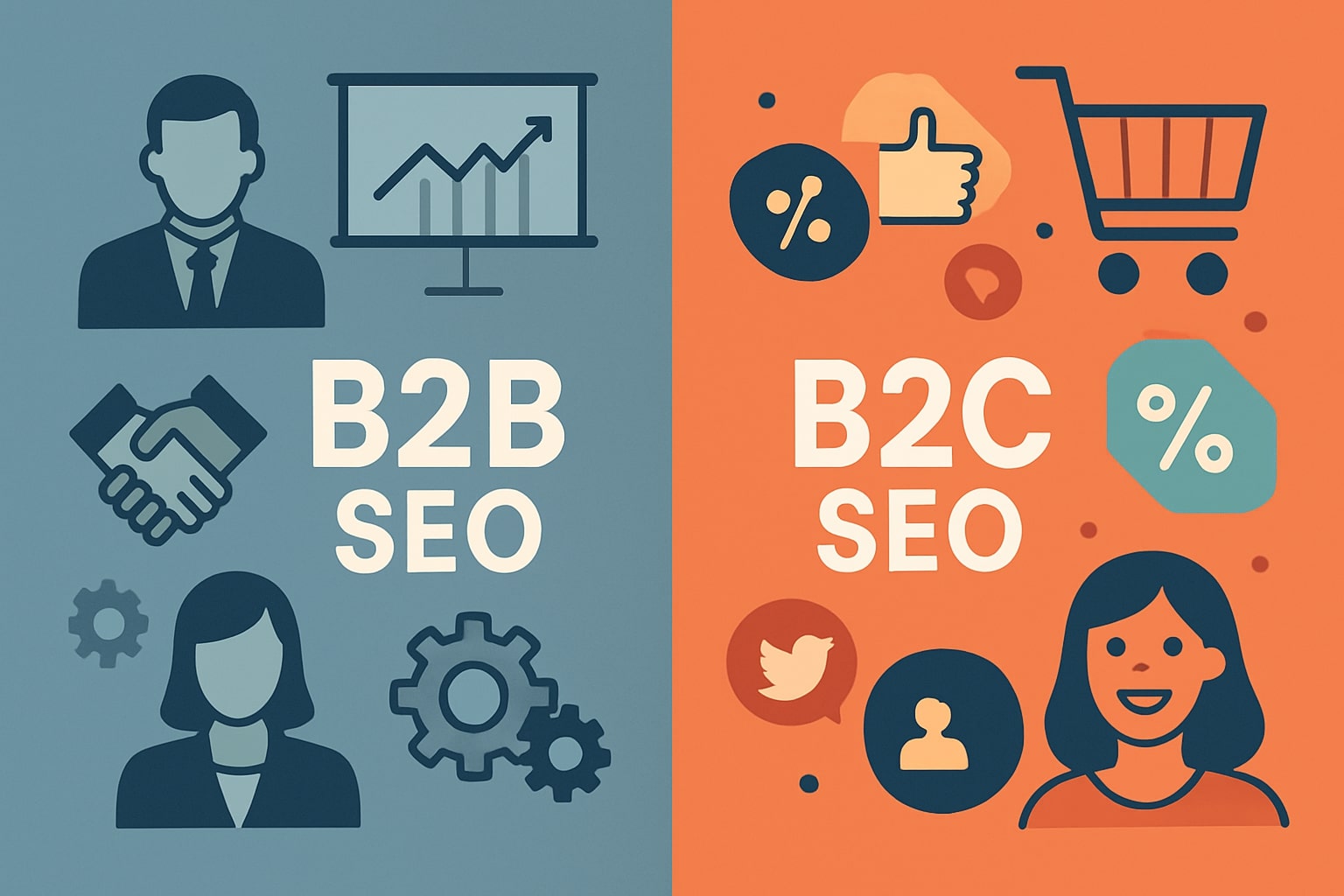
The worlds of B2B (business-to-business) and B2C (business-to-consumer) are very different. They use different ways to sell, follow different sales cycles, and have…
No articles match your search. Try another word or topic.
Get a free, no-obligation proposal tailored to your goals and budget.
Answer 3 quick steps and our experts will send a tailored proposal.