
SEO
Branded vs Non-Branded Keywords: How to Balance Both
Branded and non-branded keywords measure two different things: demand you already own and demand you still have to win. Here is how to separate, report and grow both.
Branded and non-branded keywords measure two different things: demand you already own and demand you still have to win. Here is how to separate, report and grow both.
Rankings are noisy, personalised and increasingly mixed with AI answers. This guide shows how to track keyword positions accurately and which fluctuations to ignore.

DuckDuckGo, Brave and Yahoo each get their results differently. Learn where their data comes from and the specific steps that help you rank on all three.
Google Lens turns the camera into a search box. Here is how visual search works and the practical image, product-data and page steps that help you get found.

Your customers search on Google, YouTube, TikTok, Amazon, Reddit and AI assistants. Search everywhere optimization is a practical way to show up on all of them without spreading yourself thin.
A sudden ranking drop feels urgent, but the fix depends on the cause. Use this step-by-step diagnosis to find out what really happened before you change anything.
Google ignores the meta keywords tag and Bing has treated abuse of it as a spam signal. Here is what that means for your site and which tags deserve your time instead.
Prospective clients research advisors online long before they book a call. Here is a compliant, practical SEO plan for financial advisors and planning firms.

Insurance buyers compare agents online before they call. This practical playbook covers local SEO, compliant content and reviews for independent and captive agents.
Car buyers spend hours researching online before they visit a showroom. Here is how dealerships can win that research phase with local SEO, inventory SEO and reviews.
A practical SEO playbook for travel agencies and tour operators who want more direct bookings and less dependence on online travel agencies.
How coaches and consultants can use SEO to attract the right clients from Google and fill their calendar with discovery calls.

A practical guide to SEO for interior designers and architects, from portfolio project pages and image SEO to local search and reviews.
How manufacturers can use SEO to reach engineers and procurement teams early in their research and generate qualified B2B enquiries.
A two-sided SEO playbook for recruitment and staffing agencies: win candidates with optimised job listings and win clients with sector expertise.
A step-by-step method for targeting several related keywords with one page, without keyword stuffing or cannibalising your own rankings.
Keywords are what you target; search queries are what people actually type. Here is why the difference matters for SEO and PPC, and how to use both.
A practical, honest method for forecasting organic traffic and revenue, including scenario planning and the factors that make SEO forecasts go wrong.
Fifteen practical, low-effort SEO fixes you can complete in a week, prioritised by impact and backed by Google's own guidance.
How white label SEO works, when it makes sense for an agency, and how to choose a partner without putting your clients or reputation at risk.
Should you hire an in-house SEO, bring in an agency, or combine both? Here is a practical framework for choosing, with checklists and the mistakes to avoid.
You cannot add Google sitelinks yourself, but you can make it easy for Google to show them. Here is what influences sitelinks and how to fix bad ones.
Google shows a site name and favicon on every result. Here is how to tell Google which name and icon to use, and how to fix them when they go wrong.
Google can index and rank PDFs, but they need different handling from web pages. Learn how to optimise PDF titles, text, links and canonicals, or keep them out of search.
Google does not penalise affiliate sites for earning commissions; it demotes pages that add nothing. Here is how to build an affiliate site that earns its rankings.
Wix gives you more SEO control than its reputation suggests. This guide walks through every setting that matters, in the order you should tackle them.
Squarespace handles much of the technical groundwork, but a few settings and habits make the difference between a pretty site and one that ranks.

Webflow gives you clean code and fine-grained SEO control, but only if you configure it. Here is the setup checklist we use on Webflow sites.

Off-page SEO is everything that happens away from your website that tells search engines and people your brand is worth trusting. Here is what counts, what works and what to avoid.

New to SEO? This beginner guide explains how Google works, the four pillars of SEO and a simple step-by-step plan you can follow on your own site.

Every core SEO task in one place, grouped by phase and prioritised, so you always know what to do next and what can wait.

No guesswork: these are the SEO trends of 2026 that Google has actually announced or documented, and what each one means for your site.
Keyword density, magic word counts, duplicate content penalties: many popular SEO beliefs are wrong. Here is what Google actually says, myth by myth.
Most ranking problems trace back to a familiar list of mistakes. Here is how to spot each one, how serious it is, and exactly how to fix it.
Confused by SEO jargon? This glossary explains 100 essential search terms in plain English, grouped by topic and updated for 2026.
B2B buyers research for weeks and decide in groups. This framework shows how to build an SEO strategy that reaches every stakeholder and feeds your sales pipeline.
A brand-new site has no links, no history and no data. This 90-day plan shows what to set up, which keywords to target and what results to expect.

SEO rarely works in weeks. Here is what affects the timeline, how long different tasks take to show results and which early signals to watch.
Your competitors already rank for keywords you are missing. A keyword gap analysis turns that data into a prioritised list of pages to improve or create.
No keyword tool sees everything. Compare free and paid keyword research tools by the job they do best and build a stack that fits your budget.
Google Keyword Planner is free and built on Google data, but it was made for advertisers. Here is how to set it up and read it correctly for SEO.

Google Trends shows when, where and whether interest is growing. Learn how its data works and seven practical ways to use it for SEO and content.

Zero search volume rarely means zero searchers. Learn when zero-volume keywords bring valuable leads, when they do not and how to find the good ones.
Commercial investigation keywords come from people comparing options before they buy. Learn how to find them and create pages that earn a place on the shortlist.
Transactional keywords come from people ready to buy, book or sign up. Learn how to find them, match them to the right pages and turn rankings into sales.
Keyword prominence is about position, not repetition. See which page locations matter, what Google says about each, and how to place keywords naturally.

Understand every major SERP feature in 2026, what makes a page eligible, which rich results Google has retired, and how to measure the impact.

Google has never published a full list of ranking factors. Here is what is confirmed, what is speculation, and how to prioritise your SEO accordingly.

Core updates are not penalties. Learn how to measure their impact properly, what Google recommends, and how to recover through real quality improvements.
A plain-English guide to every Google spam policy, how violations are detected and enforced, and how to audit your site so you stay on the right side of the rules.
Google's site reputation policy targets parasite SEO on trusted sites. Learn what counts as a violation, what is allowed and how enforcement changed in 2026.
Buying expired domains for their backlinks is now explicitly covered by Google's spam policies. Learn the rules, the risks and how to vet a used domain.
Bylines and author pages show readers and Google who stands behind your content. Here is what to include, how to mark them up and what to avoid.
Your homepage shapes your brand in search. Learn how to optimise its title, content, site name, internal links and speed without trying to rank it for everything.
Your service pages are where searchers become customers. Here is how to plan, write and optimise them so they rank for buyer searches and convert the traffic they earn.
Not every landing page should rank, but the ones that should need more than a headline and a form. Learn how to balance search visibility with conversion focus.
Every search result is the end of a long pipeline: discovery, crawling, rendering, indexing and ranking. Here is how each stage works and where SEO fits in.
A practical, up-to-date cheat sheet of Google search operators, with clear labels for what is officially supported, what still works unofficially and what Google has retired.

SEO split tests compare groups of pages, not groups of visitors. Here is how to design tests that produce trustworthy answers instead of noise.

Google stopped thinking only in keywords years ago. Entity SEO is how you help it recognise your brand, people and topics as distinct, trustworthy things.
Google matches meaning, not just words. Semantic SEO is how you write content that fully answers a topic, uses natural language and connects related ideas.

Knowledge panels are generated automatically from Google's Knowledge Graph. Here is how to earn one for your brand or yourself, claim it and keep the facts accurate.
People Also Ask boxes show the follow-up questions searchers have. Learn how they work, how to research them and how to write answers Google can lift.

Google Discover can send big bursts of traffic without anyone typing a query. Here is how eligibility works, what Google recommends and how to measure results.
Google News inclusion is automatic, but visibility is not. Learn the transparency signals, technical setup and editorial habits that help news content perform.

Voice search has shifted from smart-speaker answers to conversational AI. Here is what has changed, what still matters and how to prepare your site.

Thin content is about missing value, not low word counts. Learn the types Google flags, how to find thin pages on your site and the right fix for each.

There is no perfect keyword density, but keyword placement and avoiding stuffing still matter. Here is what Google says and how to use keywords naturally.

Google has said there is no such thing as LSI keywords. Here is where the myth came from, what is true about related terms, and what to do instead.
Negative SEO is real but often misdiagnosed. Learn which attacks actually cause damage, how to rule out ordinary causes and how to monitor and respond.

Google has never confirmed a sandbox, yet new sites are slow to rank. Here is what really holds them back and how to build momentum faster.
A winning SEO proposal is specific, evidence-based and honest. Learn what to include, how to write it step by step, and copy our section-by-section template.
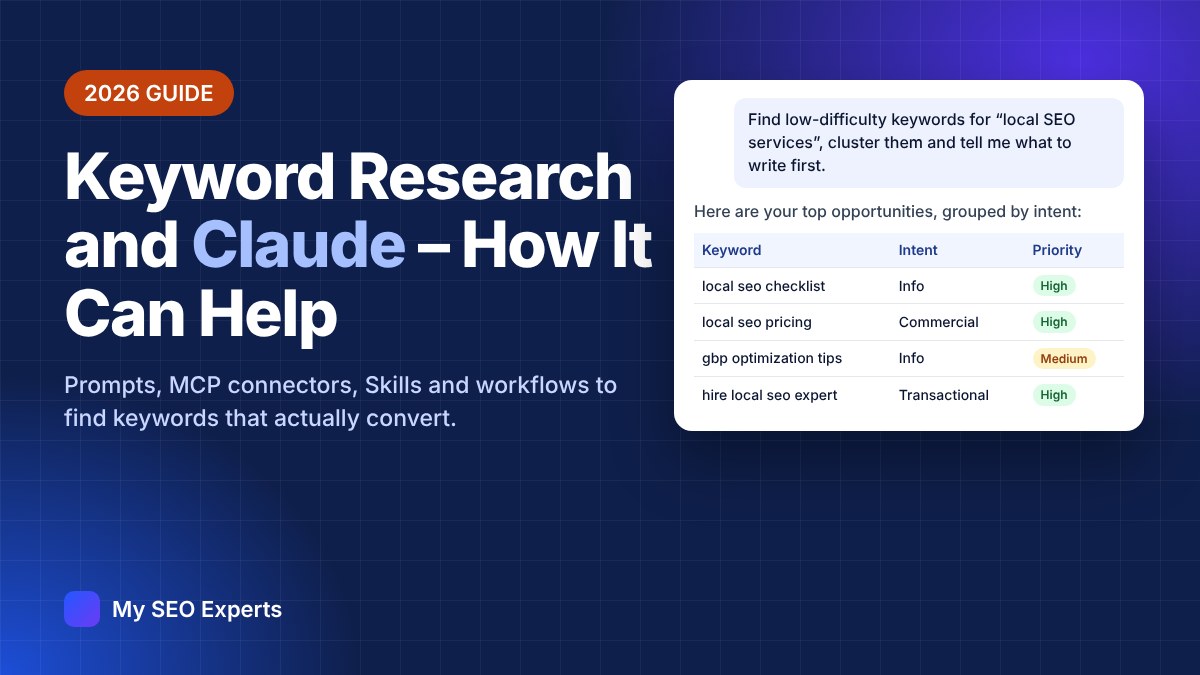
How to use Claude for keyword research in 2026 — connect real data with MCP, build a repeatable Skill and use 8 proven workflows with copy-paste prompts.
A practical, step-by-step keyword research process for 2026: where to find ideas, how to prioritise them and how to turn them into a content plan.
A clear guide to the types of keywords in SEO, with examples, a classification framework and the page type each keyword needs.
An SEO strategy turns scattered tactics into a plan tied to business goals. Here is a practical, step-by-step process for building one in 2026.
Search intent is the reason behind every query. Learn the main types, how to read intent from the results page and how to optimise your content for it.

Small businesses can compete in search without big budgets. This guide shows where to focus first, what to skip and how to track results.
Long-tail keywords are specific, lower-volume searches with clear intent. Here is how to find them, judge them and use them effectively.
International SEO helps search engines show the right language and country version of your site. Learn how to plan, structure and localise for global search.
SEO pricing varies widely by provider, location and scope. We summarise what published industry surveys report and explain how to budget sensibly.
When your own pages compete for the same keyword, rankings suffer. Learn how to spot keyword cannibalization and fix it for good.
Hiring the wrong SEO agency wastes months and can damage your site. Use these 15 questions and a simple selection process to choose with confidence.

A practical, step-by-step method to analyse your SEO competitors and turn the findings into a prioritised plan to outrank them.

You can cover most SEO essentials without paying for software. Here are the free SEO tools worth using in 2026 and how to combine them.

Google updates its ranking systems constantly. Here is a concise history of the major Google algorithm updates and a practical way to respond when one hits.

A 12-point on-page SEO checklist for 2026 covering titles, meta descriptions, headings, content, internal links, images, schema and page experience.

Google’s helpful content guidance explains how its systems reward people-first content. Learn the self-assessment questions and how to apply them to your site.

Your title tag is your headline in Google. Here is how to write titles that rank, avoid rewrites and earn more clicks in 2026.
A manual action can remove pages or your whole site from Google. Learn how to confirm one, fix the cause and submit a successful reconsideration request.
Meta descriptions do not rank pages, but they win clicks. Learn how Google uses them and how to write ones that get chosen.
Programmatic SEO lets you publish hundreds of useful pages from a template and a dataset. Here is how to do it while staying clear of Google's scaled content abuse policy.

Internal links help Google find, understand and prioritise your pages. Here is how to plan and build them properly.

WordPress gives you a solid SEO foundation, but only if it is configured correctly. Follow this setup guide to get indexing, URLs, plugins, speed and content right.
Keyword difficulty scores help you prioritise, but they are estimates. Learn how they are calculated and how to combine them with your own SERP analysis.
Search volume is one of the first numbers you see in keyword research and one of the most misunderstood. Here is how to find it and read it correctly.
Keyword clustering turns a messy keyword list into a clear content plan. Learn how to group keywords by intent and SERP overlap, manually or with tools.
Seed keywords are the short, core terms every keyword research project grows from. Learn how to find the right ones and expand them into a full list.
Question keywords reveal exactly what your audience wants to know. Learn how to find them, prioritise them and write answers that get surfaced in search and AI results.
A keyword map tells you which page targets which keywords. Learn how to build one, use it to fix cannibalization and plan new content.

Heading tags structure your content for readers, screen readers and search engines. Here is what Google actually says about them and how to use them well.

Clean, readable URLs help users and search engines. Learn Google's URL recommendations, how to structure folders and slugs, and how to change URLs without losing traffic.
Alt text serves two audiences at once: people using screen readers and search engines trying to understand your images. Here is how to write it well for both.
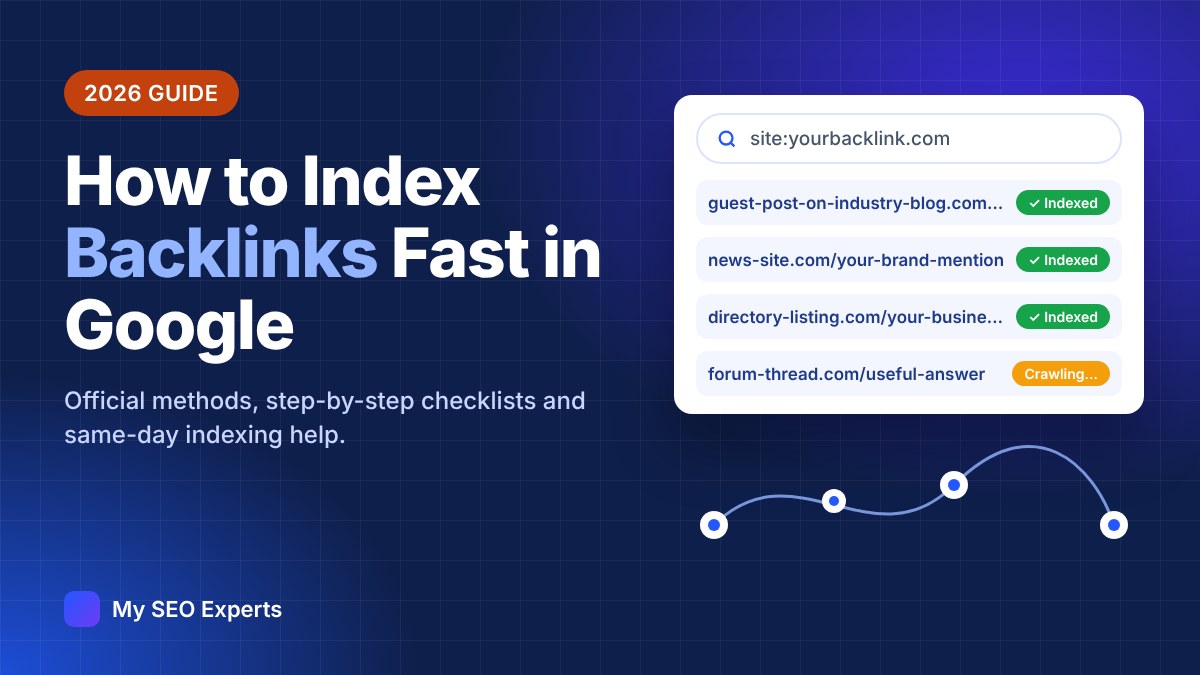
Unindexed backlinks can’t help your rankings. Here’s every method to get backlinks indexed fast in Google in 2026 — plus our same-day indexing service.
Franchise marketing uses tools like online ads, emails, search engines, trade shows, and internet promotions to help your business grow and earn money over time. Good…
The worlds of B2B (business-to-business) and B2C (business-to-consumer) are very different. They use different ways to sell, follow different sales cycles, and have…

The main difference between white hat SEO and black hat SEO is the methods each uses to improve a website’s ranking in search engines. What is Black Hat SEO? Black hat…
What Does “Crawled – Currently Not Indexed” Mean? Most SEOs feel the pain of pages not getting indexed. When you submit a page to Google for indexing and nothing…
Artificial Intelligence (AI) continues to evolve at an unprecedented pace, and conversational AI tools like ChatGPT are at the forefront of this transformation. However…
About the update Google’s March 2024 Core Update in Brief Why Was The Update Required? SEOs have been exploiting the Google’s algorithm system of rankings by…

Establishing yourself as a leader in your field, and one of the most effective ways to achieve this is through building topical authority. A staggering 93% of all online…
Having a strong online presence is essential for the growth and success of any business. One powerful tool that can significantly impact your online visibility and…

Looking to boost your ecommerce website’s visibility and traffic? In today’s competitive online market, a solid SEO strategy is essential. This article provides valuable…
Did Google suspend your GMB listing? Here is how you can reinstate your GMB very easily. Google suspends business profiles if there’s suspicion of guideline violations…
Social media platforms, including Twitter, have become powerful tools that connect people, within and outside communities, promote engagement, and heps in quickly…
At My SEO Experts, we provide a reliable and affordable solution for purchasing reviews for your GMB profile, priced at just $4 per review. In this article, we will…
Are you looking to expand your online presence and reach a wider audience? One of the most effective ways to achieve this is through guest posting. By publishing your…
What is a Canonical Tag? A “Canonical Tag” is a way of pointing to the primary copy of a webpage or URL to search engine bots. Using a canonical tag prevents problems…
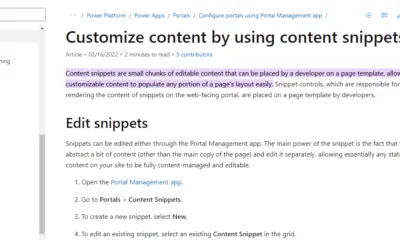
So you’ve just created your first snippet and are ready to share it with the world. How do you get people viewing your creation? After all, a snippet is essentially a…
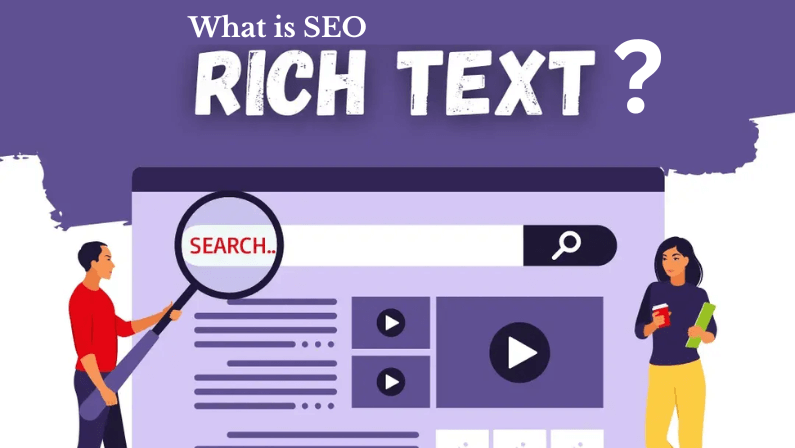
Do rich snippets help SEO? If you an SEO professional and are in doubt about the impact of rich snippets on SEO of the website, we have a clear cut answer for it. Let’s…
Google is constantly updating its algorithms to improve search results. There is no specific frequency of algorithms being rolled out for a matter of fact that people…
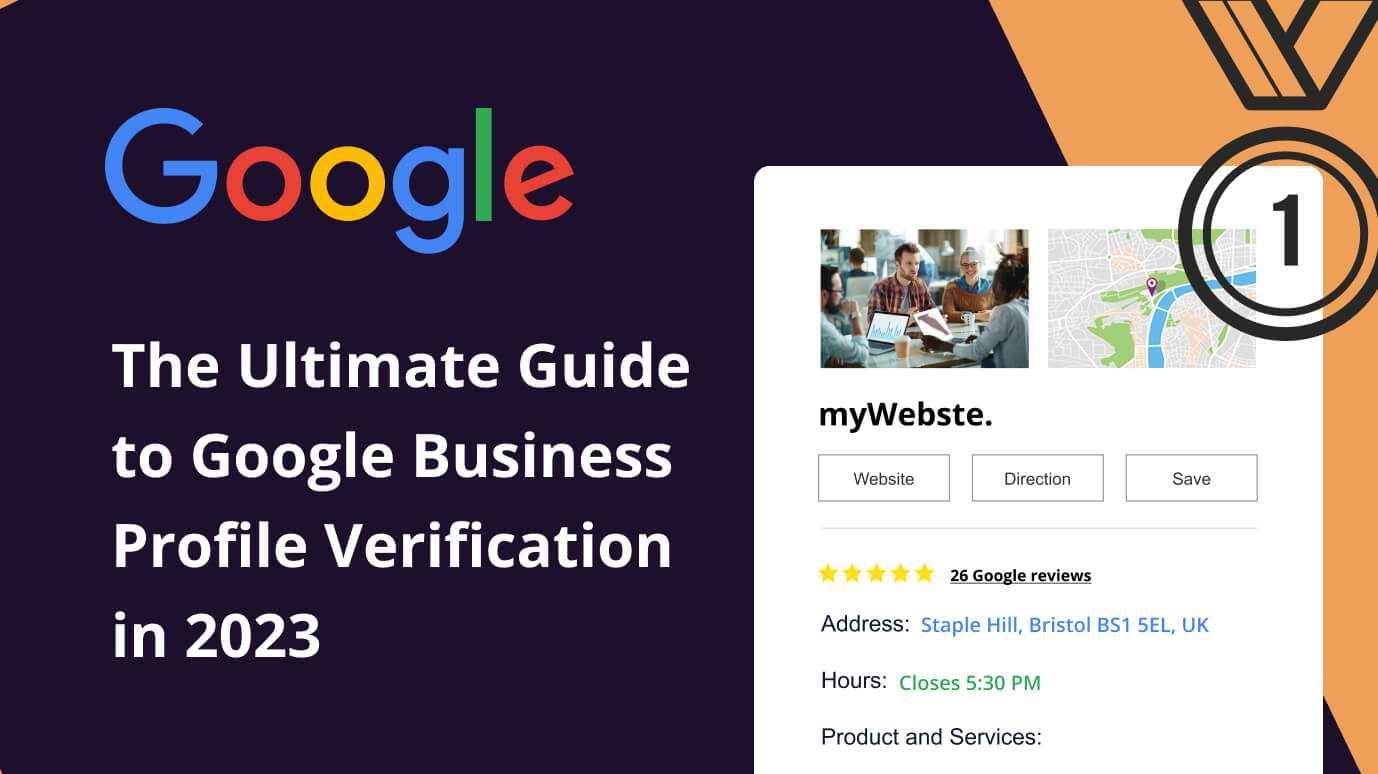
Verifying Google My Business without Postcard in 2023 when Google has become even more powerful is quite a difficult task and thousands of people out there have been…
Non-profit organizations and businesses in many ways seem quite similar. Both work hard to provide a good or service that will benefit the world at large. However, there…

If you are into the SEO profession, you definitely would be struggling to appear in featured snippets as your bosses would have been pushing you hard for the same. Every…
It is easier to Buy A GMB Listing Online than go through all the hassle yourself. When you want to have a GMB (Google My Business) listing live but have no physical…

SaaS businesses are now a thing in 2021 and will see a continuous growth in the upcoming years. With the evolution of new technology each day it is becoming tougher and…
Saas Companies need specialised SEO services and we provide that. Most of the Saas companies are aware that content and SEO are the things that can drive a lot of…

Are you looking for the best SEO services in Melbourne? We’re pretty sure if you reached here, that’s what you are looking for exactly. Let’s have a look at the things…

SEO is one of the most common term used by Digital Marketers in the modern era. Let’s go through it’s concept step by step. I want my readers to understand the concept…

What is Robots.txt? Robots.txt is a file that is placed at the root directory of any domain. It is the first file that is read by crawlers on the website. IT is…
What is the Search Console? The Search Console is a free analysis tool offered by Google. This means that webmasters have a very fine tool at hand – because the GSC…
To sort its search results, Google uses a machine-learning system known as the RankBrain. Ask how it works and fits into the overall classification scheme of Google?…
There are a lot of myths around this topic that have prevailed for a lot of time in the SEO industry. One of those myths is “Google does not crawl content in accordion”…
What is E-A-T? For SEO, E-A-T stands for knowledge, authority, and trust. This definition is widely discussed in the Performance Guidelines of Google. Proving good E-A-T…
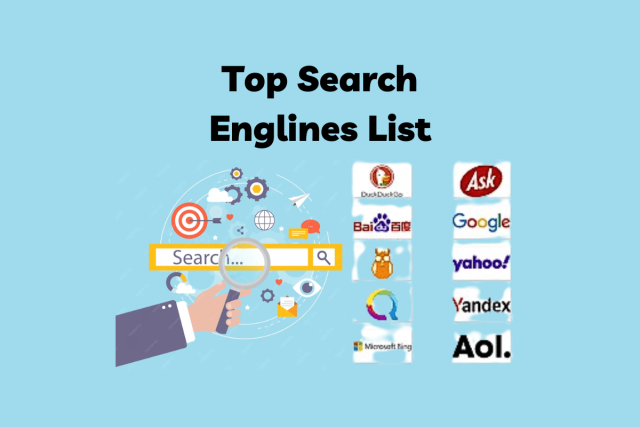
Search Engines have become a vital part of our life now. Whenever we pick up our phone, PC or anything that is connected to the internet, one thing that we always do is…
No articles match your search. Try another word or topic.
Get a free, no-obligation proposal tailored to your goals and budget.
Answer 3 quick steps and our experts will send a tailored proposal.